
If you’ve ever found yourself meticulously counting every calorie, sweating through exhausting workouts, and staring at a scale that refuses to move, it is time to stop blaming your willpower.
The frustrating truth is that weight management isn’t a simple math problem of calories-in versus calories-out. It’s a hormone story. And at the center of that story is a single, powerful chemical messenger: insulin.
The Ultimate Gatekeeper of Your Fat Cells
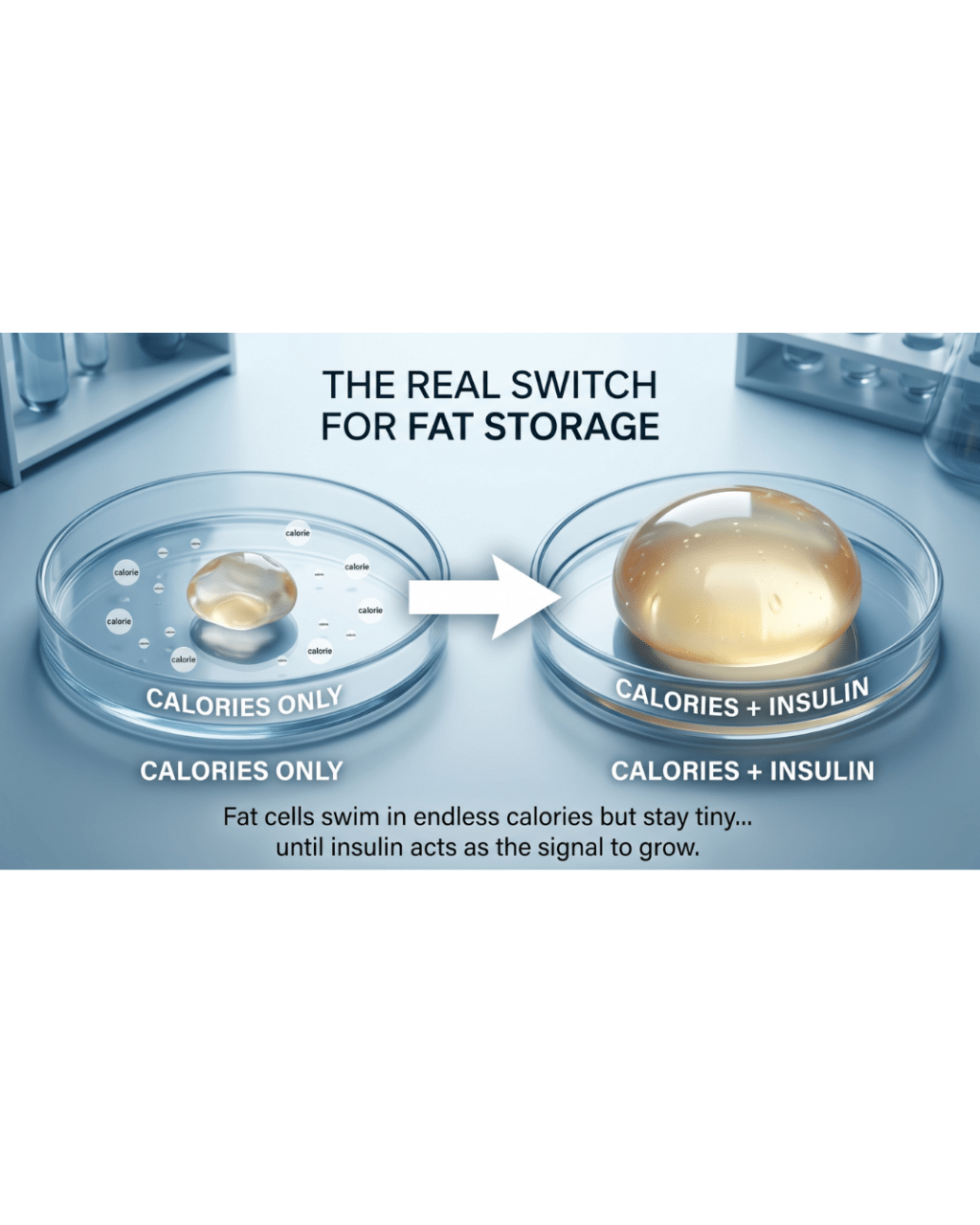
In research labs, scientists grow fat cells in petri dishes surrounded by an endless supply of calories. You would think those cells would automatically balloon in size, right? Surprisingly, they stay tiny. They don’t grow at all—until scientists add one specific ingredient to the mix: insulin. The moment insulin enters the picture, those fat cells rapidly expand.
Biologically speaking, it is completely impossible for a fat cell to store energy and grow unless insulin levels are elevated. Insulin is the literal master switch. When it’s flipped “on,” your body is strictly in fat-storage mode. When it’s allowed to drop back down to a quiet baseline, the gates unlock, and your body can finally flip into fat-burning mode.
The Breakfast Trap: Working Against the “Dawn Effect”
A lot of people struggle with weight because they are unintentionally triggering an insulin spike at the worst possible time: first thing in the morning.
Every single night while you sleep, your insulin naturally drops down to a beautiful, low baseline. But around 4:00 AM, your body naturally surges cortisol to help you wake up. This completely normal cortisol spike signals your liver to release stored glucose into your bloodstream, making you naturally more insulin-resistant the moment your eyes open.
If you rush straight to the kitchen and grab a traditional breakfast—think sugary cereals, toast, juice, or even a sweetened coffee—you cause a massive, exaggerated insulin spike on top of an already sensitive system. You instantly lock your body out of fat-burning mode for the rest of the morning.
How to Work With Your Biology
To reset your metabolism and keep your insulin levels stable, we need to shift our morning focus. Here are three simple, science-backed lifestyle changes to start practicing tomorrow:
- Delay Your First Meal: Give your body 60 to 120 minutes after waking up before you eat. Use your natural morning energy to stretch, hydrate with water, or take a leisure bike ride or walk.
- Prioritize Protein and Fats: When you do break your fast, make it a mindful ritual. Skip the quick carbs and focus entirely on clean proteins and healthy fats (like savory egg muffins, smoked salmon, or avocado) to prevent an insulin spike.
- The Caffeine Rule: Did you know that combining caffeine with carbohydrates actually multiplies your insulin response? Your body has to pump out significantly more insulin to clear glucose when caffeine is in the mix. Drink your morning coffee black, use a splash of heavy cream, or enjoy it alongside a carb-free protein breakfast.
Accelerate Your Alignment: The Power of Nutritional Synergy
Changing what you eat removes the metabolic brakes, but you can also step on the accelerator. To truly maximize your results, pairing these clean dietary changes with a targeted, premium body-balancing system can be a total game-changer.
While food manages your daily insulin spikes, a high-quality, science-backed body-balancing system works at a cellular level to support healthy hormone pathways, ease intense carbohydrate cravings, and make the transition into sustainable fat-burning feel incredibly smooth. It’s the ultimate combination for anyone looking to build a vibrant, healthy lifestyle.
Want to take the guesswork out of your mornings? I’ve put together a completely free, step-by-step 3-Day Low-Insulin Metabolic Reset Plan & Grocery Shopping List featuring quick, delicious recipes to keep your energy high and your insulin low.
[👉 CLICK HERE TO DOWNLOAD YOUR 3-DAY RESET PLAN & SHOPPING LIST]
Information for this blog was obtained from Dr. Ben Bikman, Metabolic Scientist, Researcher, and Professor of Cell Biology and Physiology at Brigham Young University.



 Wake Up to Results
Leave a comment